

AI CERTS
7 months ago
Shield AI rockets to $5.3B valuation
Therefore, industry professionals are asking what drives such rapid growth. This article dissects the deal, product roadmap, leadership changes, and competitive environment. Additionally, it weighs risks and outlines strategic takeaways for stakeholders. Every insight intends to help executives benchmark opportunities in emerging defense autonomy.
Funding Surge Key Details
However, the March deal is more than eye-catching numbers. Investors included strategic giant L3Harris and Korea's Hanwha alongside Andreessen Horowitz. Consequently, the syndicate blends established defense primes with top venture capital. Shield AI said proceeds will accelerate global rollout of Hivemind Enterprise.
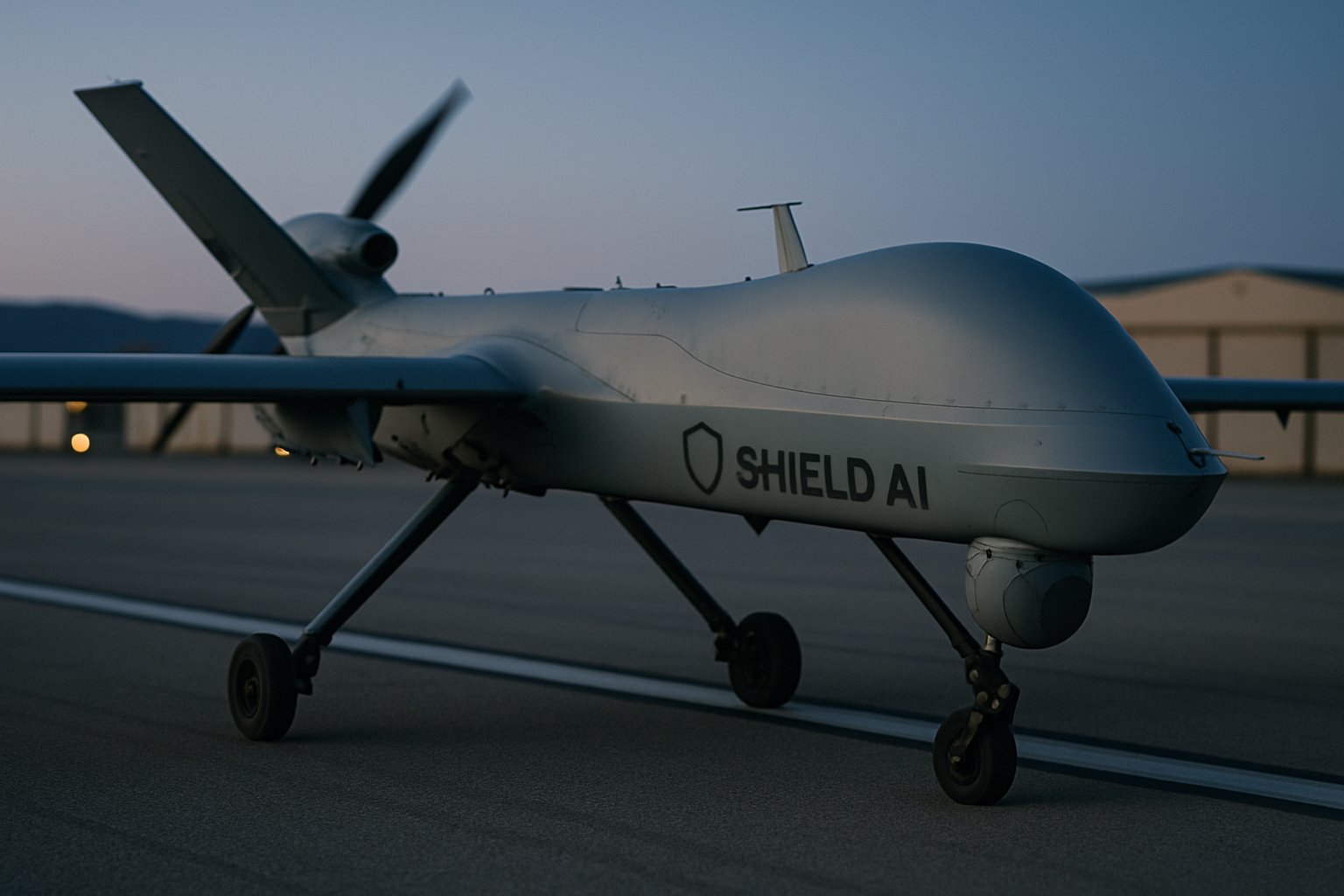
- $240 million fresh capital
- $5.3 billion post-money value
- More than 900 employees companywide
- Series E value in 2022: $2.3 billion
- Series F value in 2023: ~$2.8 billion
These statistics illustrate outsized momentum. Meanwhile, investors also track how that valuation climbed so quickly.
Steep Valuation Growth Path
Between 2022 and 2025, the firm's valuation more than doubled. In contrast, typical Military Tech startups grow slower due to long procurement cycles. Analysts attribute Shield AI's leap to revenue expectations from software licensing. Moreover, the strategic investors may integrate Hivemind into their own unmanned portfolios. Therefore, the market assigns platform-style multiples rather than hardware price metrics. Nevertheless, private prices remain sensitive to contract awards and export approvals. The trajectory underscores investor optimism. Yet, optimism depends on making Hivemind Enterprise ubiquitous.
Hivemind Enterprise Product Push
Hivemind Enterprise packages perception, planning, and mission software into modular components. Consequently, OEMs can embed autonomy without reinventing core algorithms. The suite includes EdgeOS, Hivemind Pilot, Commander, and Forge. Furthermore, the company fields V-BAT and experimental X-BAT airframes to showcase the software. Shield AI demonstrates autonomous F-16 flights to prove high-performance decision making. Additionally, Singapore's RSAF partnership signals commercial viability beyond U.S. markets. Professionals can enhance their expertise with the AI Robotics™ certification. These features convert autonomy from service to scalable product. Subsequently, leadership must align execution with growth targets.
Leadership Shift And Implications
Gary Steele will assume the CEO role on 13 May. Meanwhile, co-founder Ryan Tseng becomes President focused on policy engagement. Observers view the move as a classic scale-up tactic. Moreover, Steele led Splunk through IPO preparation, giving investors confidence. Shield AI believes his enterprise software background complements defense relationships. Nevertheless, cultural integration between Silicon Valley and defense culture remains delicate. Leadership credibility can unlock larger procurement deals. Consequently, competitive dynamics are rapidly evolving.
Competitive Defense Tech Landscape
Anduril still tops private defense worth at roughly $28 billion. In contrast, smaller startups like Saronic target maritime autonomy niches. Furthermore, traditional primes increasingly invest rather than build autonomy in-house. Military Tech funding rounds exceeded $3.5 billion globally during 2024 alone. Shield AI now sits second by private worth in the United States. Therefore, suppliers and agencies monitor interoperability across these platforms. Competition adds urgency to deliver scalable autonomy first. However, rapid expansion introduces material risks.
Risks Facing Rapid Expansion
The April 2024 V-BAT mishap injured a sailor and delayed some contracts. Consequently, safety audits diverted engineering resources for months. Moreover, profitability targets slipped as aircraft deliveries paused. Value assumptions hinge on swift recovery and sustained license revenue. Additionally, ethical debates about autonomous weapons could limit export approvals. Nevertheless, the company reports renewed momentum after clearing regulatory reviews. Risk management will decide future market trust. Therefore, the strategic outlook deserves clear attention.
Strategic Outlook And Takeaways
Investors expect continued defense spending on resilient autonomous systems. Subsequently, governments seek platforms that function without GPS or stable comms. Shield AI positions Hivemind as that universal autonomy layer. Furthermore, licensing could diversify revenue beyond hardware manufacturing margins. Military Tech insiders predict new multinational pilots within eighteen months. In contrast, slower contract cycles may pressure market prices if expectations outrun bookings. Stakeholders should watch upcoming U.S. budget debates and NATO procurement decisions.
- Track foreign partnership announcements quarterly
- Monitor software license share of revenue mix
- Watch safety audit findings and mitigations
These points shape near-term performance. Consequently, informed action is essential now.
Shield AI has leapt from promising drone maker to multibillion-dollar autonomy platform vendor. However, that ascent relies on flawless execution and disciplined risk management. Military Tech investors reward speed yet punish missteps quickly. Therefore, Shield AI must convert partnerships into recurring software revenue while scaling safely. Moreover, transparent reporting will sustain its premium valuation with skeptical stakeholders. Professionals seeking mastery of defense autonomy can upskill through the linked certification. Consequently, now is the moment to study, strategize, and engage with this pivotal shift. Explore the certification and stay ahead as Shield AI reshapes autonomous defense capabilities.
Disclaimer: Some content may be AI-generated or assisted and is provided ‘as is’ for informational purposes only, without warranties of accuracy or completeness, and does not imply endorsement or affiliation.


