

AI CERTS
5 hours ago
Tech Giants Push Light-Touch AI Regulation
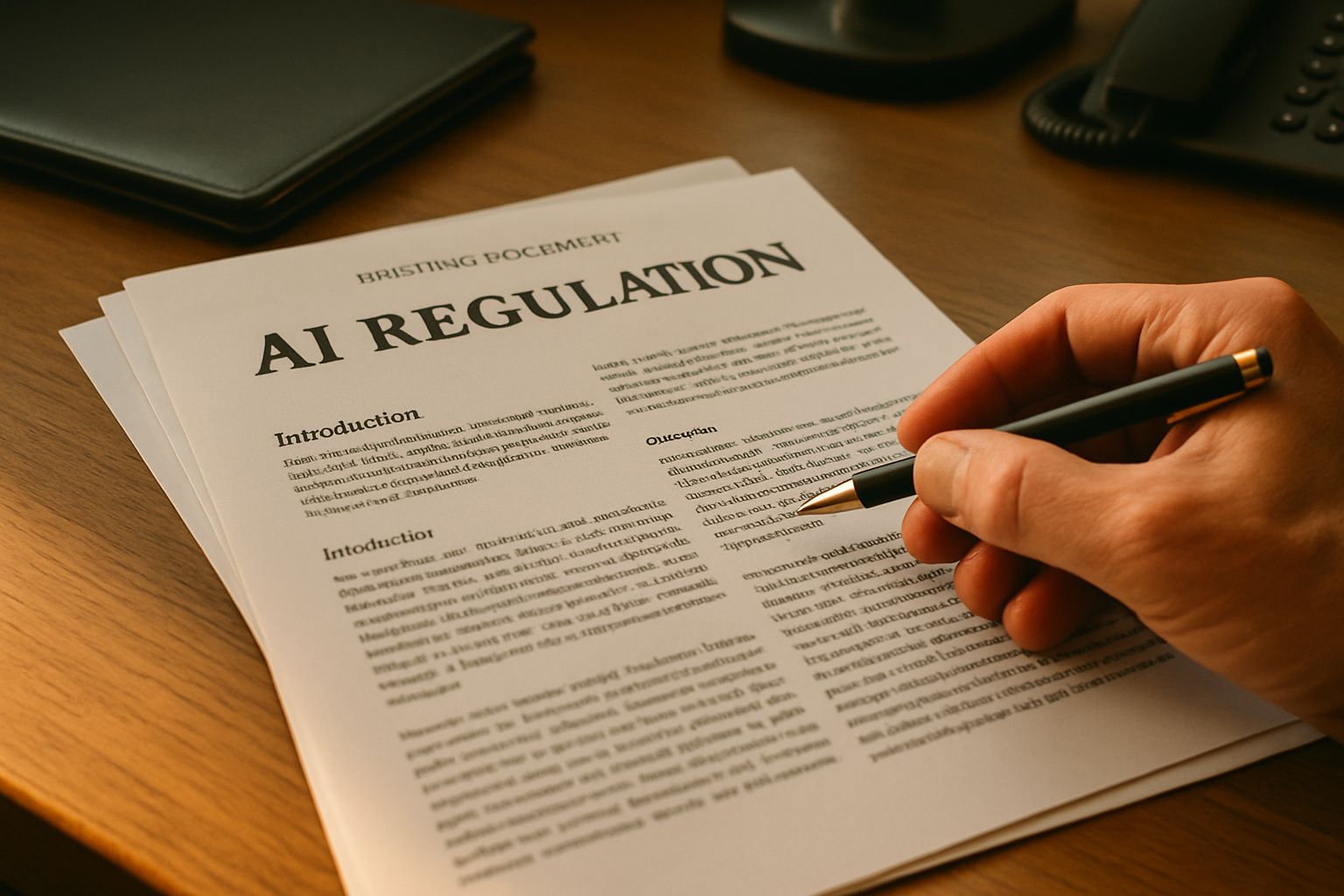
Moreover, several states already pursue tougher requirements, setting the stage for jurisdictional conflict. Consequently, Congress confronts intense lobbying, soaring campaign donations, and divergent visions. The outcome will shape market forecasts that exceed one trillion dollars for Generative AI spending.
This article unpacks the arguments, numbers, and global context driving the legislative fight. It also highlights certification pathways for professionals navigating the evolving governance landscape.
Industry Seeks Policy Uniformity
Large platforms frame their campaign around innovation and competitiveness. Sam Altman told the Senate that one federal framework, preferably light, enables speed the moment demands.
Brad Smith echoed that sentiment, stressing how data center permitting already drags without further compliance layers. Furthermore, trade groups like ITI cite the EU AI Act as proof that Heavy-handed regimes divert capital abroad.
In their view, predictable AI Regulation would mirror financial disclosure norms rather than strict product licensing. These executives want predictable, minimal oversight to safeguard growth.
Microsoft estimates that domestic demand requires thousands of new GPUs monthly, a figure sensitive to regulatory uncertainty. Moreover, venture investors tell our newsroom that deal flow slows whenever compliance questions linger.
However, rising lobbying outlays reveal how high the stakes have become.
These arguments showcase industry goals and policy fears.
Consequently, lawmakers face mounting pressure as lobbying dollars surge.
Lobbying Spend Surges Upward
Lobby disclosure data show impressive momentum behind the industry's cause. OpenSecrets counted roughly 600 organizations lobbying on AI issues in 2024, up from 450 one year earlier.
Moreover, big tech firms each spent over ten million dollars, targeting AI Regulation language in multiple bills. OpenAI and Anthropic tripled dedicated budgets, according to TechCrunch analysis.
Key Lobbying Spend Numbers
- Nearly 200% jump in AI-related lobbying since 2022.
- OpenAI disclosed seven new lobbyists in 2024 filings.
- Trade groups submitted 40 papers opposing Heavy-handed oversight.
- Microsoft reported 130 meetings on policy topics.
Lobbyists target tax, defense, and procurement committees because those panels steer budgets critical for AI infrastructure. Additionally, campaign donations often coincide with key amendment deadlines, illustrating strategic timing.
These numbers underscore how deeply policy now influences corporate valuations.
Consequently, Congress is fielding competing drafts at remarkable speed.
Congressional Preemption Debate Intensifies
Spring 2025 produced the most explicit clash yet. House Republicans circulated text imposing a ten-year moratorium on state AI laws.
Critics labeled the proposal Heavy-handed centralization that could freeze local experimentation. In contrast, sponsors argued the same moratorium prevents a compliance nightmare and supports efficient AI Regulation.
Legal scholars warned that sweeping preemption faces constitutional hurdles and political blowback.
Democrats from technology hubs oppose broad preemption yet still favor national privacy baselines to reduce confusion. Meanwhile, rural state senators worry about workforce displacement if strict crackdowns halt investment.
The legislative language remains fluid yet enormously consequential.
Meanwhile, state attorneys general are preparing lawsuits should preemption pass.
Opponents Demand Strong Safeguards
Civil-society coalitions argue that light rules shift costs to consumers and workers. Public Citizen and Public Knowledge coordinated letters opposing blanket federal overrides.
Moreover, they cite discriminatory algorithms and deepfake scams as evidence Generative AI needs stricter guardrails. Advocates claim any AI Regulation without enforceable penalties remains hollow.
Some experts favor a risk-based framework similar to the EU model, yet still enforceable ex-ante. Consequently, they dismiss the industry's warnings as Heavy-handed rhetoric masking profit motives.
California's draft rules would require annotated training data disclosures for high-risk Generative AI systems. Consequently, business associations warn that start-ups could relocate rather than reveal proprietary corpora.
Public advocates continue pressing for transparency, liability, and worker protection clauses.
Therefore, international comparisons have grown more influential in Washington discourse.
Global Models Diverge Sharply
The EU AI Act offers the clearest alternative approach. It grades systems by risk and imposes ex-ante duties on high-risk categories.
U.S. executives cite the Act when warning against Heavy-handed local copycats. However, European officials argue that clear obligations boost trust and market adoption.
Meanwhile, China pursues expansive state control, adding geopolitical context to the AI Regulation debate.
European regulators also created an AI Office to coordinate enforcement, something absent in the current U.S. debate. In contrast, Washington leans on existing agencies like the FTC, which critics argue lack technical resources.
Global divergence pressures firms to tailor compliance strategies per region.
Subsequently, policymakers examine hybrid paths blending innovation with accountability.
Potential Policy Paths Forward
Analysts outline three broad options for Congress.
Option one adopts the current industry blueprint of light oversight, voluntary standards, and sandboxes.
Secondly, lawmakers could craft moderate AI Regulation mirroring NIST risk guidance yet retaining some state authority.
Finally, another route embraces strong ex-ante rules akin to the EU Act, accepting possible investment shifts.
Furthermore, blended models could pair federal baseline standards with room for state innovation experiments.
- Uniformity eases nationwide deployment but limits regional protections.
- State flexibility encourages tailored safeguards yet increases compliance complexity.
- Strict ex-ante licensing may deter small innovators while curbing systemic risks.
Stakeholders also debate time horizons, with some seeking phased obligations for Generative AI systems. Therefore, compromise might hinge on disclosure rules, liability shields, and incentives for trusted certifications.
Effective AI Regulation will likely emerge through staged compromises.
Businesses investing now seek clarity on export controls, liability insurance, and cloud tax incentives tied to AI Regulation. Moreover, internal governance teams must map model provenance to satisfy forthcoming audit standards.
Professionals can enhance their expertise with the AI Developer certification.
No single roadmap satisfies every faction, yet incremental consensus seems possible.
Consequently, workforce readiness emerges as a parallel priority.
Conclusion and Next Steps
The struggle over AI Regulation pits growth ambitions against accountability demands.
Lobbying dollars, Senate hearings, and global comparisons continue shaping the narrative.
Nevertheless, bipartisan appetite exists for guardrails that avoid stifling Generative AI breakthroughs.
Therefore, leaders should monitor bill language, prepare compliance playbooks, and upskill teams quickly.
Explore certifications and subscribe for ongoing insights to stay ahead in this fast-moving policy arena.


