

AI CERTS
3 months ago
MiniMax Lawsuit: Studios Accuse AI Firm of Massive IP Theft
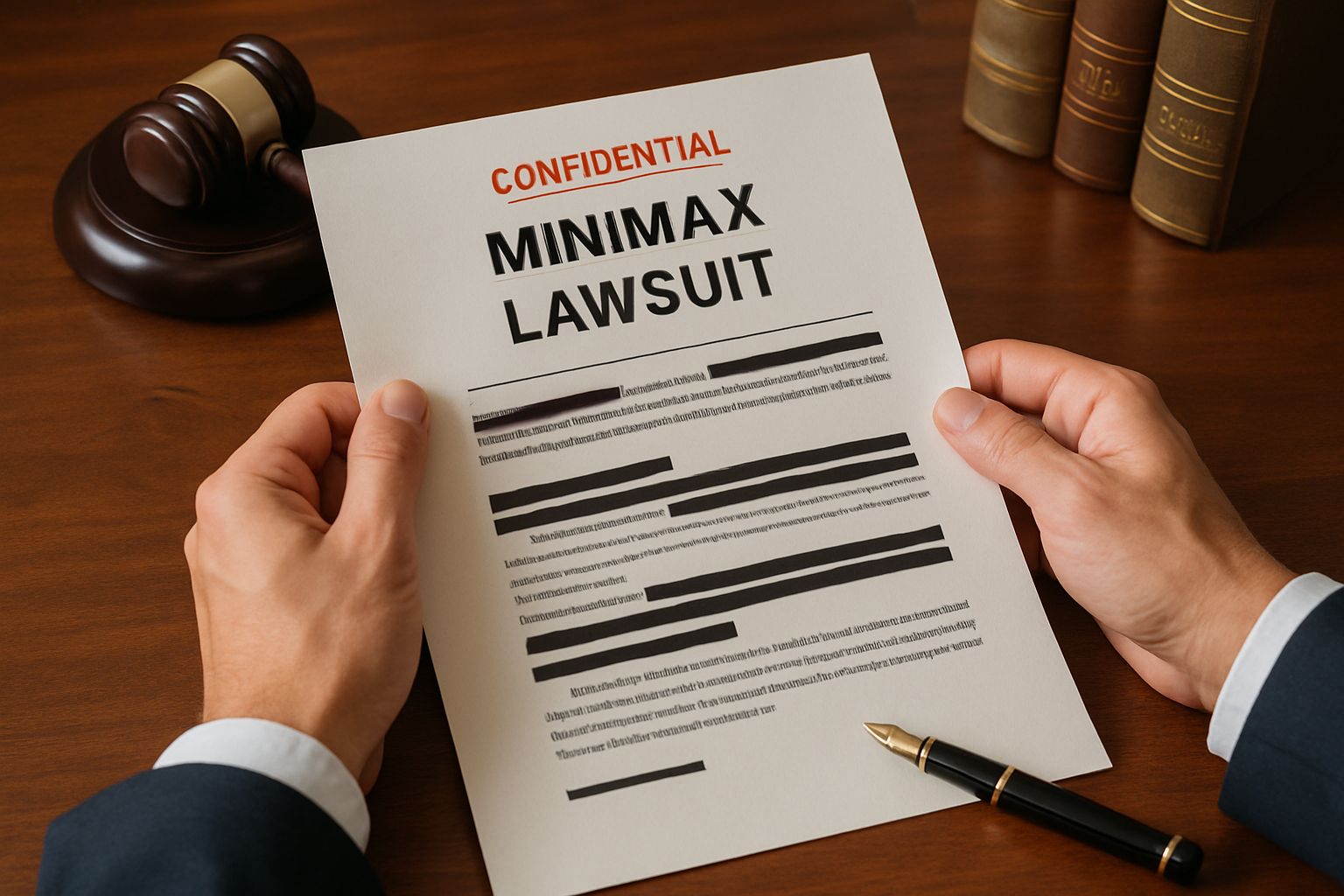
Generative AI now tests the boundaries of Copyright, fair use, and international IP enforcement.
Consequently, this courtroom drama could ripple far beyond Hollywood.
Executives building AI products must track every precedent that emerges from the Central District of California.
Furthermore, policy makers will mine the record for guidance on balancing innovation and creator rights.
This article dissects the filing, its stakes, and actionable lessons for enterprise leadership.
Moreover, we spotlight key statistics drawn from public dockets and Reuters coverage.
Finally, we outline next procedural moves and certification resources for decision-makers.
Nevertheless, every statement below keeps sentences concise for rapid executive reading.
Therefore, prepare for a detailed yet streamlined exploration.
Studios Launch Legal Offensive
Reuters confirmed that Disney, Universal City Studios, and Warner Bros. filed a 119-page complaint on 16 September.
In contrast, MiniMax and its Hailuo service were named as central defendants.
Consequently, the court opened case 2:25-cv-08768 in the Central District of California.
The MiniMax Lawsuit alleges wholesale appropriation of blockbuster characters to train and market Hailuo.
Moreover, plaintiffs describe Hailuo as "a Hollywood studio in your pocket" that misleads consumers.
Screenshots in the filing reportedly show Darth Vader, Shrek, and Wonder Woman with visible MiniMax branding.
Additionally, the studios claim prior cease-and-desist letters were ignored.
This pattern supports allegations of willful infringement and heightens potential statutory damages.
These opening facts sketch a combative posture.
Litigation momentum now favors the rightsholders.
However, the technical claims demand deeper exploration in the next section.
Core Allegations Explained Clearly
At the heart of the complaint lies data acquisition.
Plaintiffs argue MiniMax scraped high-resolution studio assets without licenses.
Furthermore, they assert that Hailuo memorizes protected frames and reproduces them on prompt.
Such reproduction qualifies as direct Copyright infringement under 17 U.S.C. §106.
Meanwhile, the MiniMax Lawsuit also pleads secondary liability theories.
The studios allege MiniMax profits from user infringement while declining reasonable filtering measures.
Moreover, marketing slogans allegedly entice users to create unlicensed Disney and DC mash-ups.
Experts say contributory fault can attach when promotion encourages infringing conduct.
Consequently, defendants face claims for up to $150,000 per infringed work.
These theories frame formidable financial exposure.
Therefore, remedies occupy the spotlight next.
Legal Remedies Sought Aggressively
The complaint requests both monetary and equitable relief.
Plaintiffs reserve the right to elect statutory damages at maximum levels for willful acts.
Additionally, they seek compensatory damages matching lost licensing revenue.
Injunctive demands would bar Hailuo from distributing or even generating infringing outputs.
Moreover, the MiniMax Lawsuit asks the court to compel dataset destruction if material is unlawful.
Such destruction orders appeared in earlier Getty versus Stability preliminary rulings.
Consequently, AI developers now model products with preemptive compliance in mind.
These remedies could cripple MiniMax operations if granted.
In contrast, broader industry effects require separate analysis.
Broader AI IP Context
Generative AI litigation now spans authors, newsrooms, record labels, and film studios.
June court opinions granted partial fair use defenses for training on legally obtained corpora.
However, judges flagged piracy and memorization as actionable regardless of transformative purpose.
Therefore, dataset provenance remains decisive in every emerging docket.
Analysts place the MiniMax Lawsuit alongside Midjourney and Anthropic cases now working through discovery.
Furthermore, policy bills in Congress contemplate disclosure duties for model training sources.
The U.S. Copyright Office will release further guidance in early 2026.
These developments shape a shifting compliance map.
Subsequently, market risks escalate for unprepared founders.
Business And Market Fallout
Investors originally valued MiniMax near $4 billion ahead of a potential Hong Kong IPO.
However, underwriters must now handicap litigation overhang.
The MiniMax Lawsuit may delay listing approvals or reduce valuation multiples.
Moreover, enterprise clients could pause integrations until infringement filters pass audits.
Key Statistics Snapshot Data
- Hailuo user base: 157 million individuals worldwide.
- Enterprise adopters: 50,000 firms across 90 nations.
- Funding raised since 2023: approximately $850 million.
- Statutory damages exposure: up to $150,000 per infringed work.
Consequently, potential liabilities dwarf recent venture inflows.
Disney alone controls thousands of IP assets named in the complaint.
Additionally, hedge funds monitor Copyright debates before betting on AI public offerings.
These figures illuminate stark downside scenarios.
Analysts warn the MiniMax Lawsuit could trigger expensive revenue deferrals across the sector.
Nevertheless, strategic planning can mitigate exposure, as explored next.
Guidance For Enterprise Leaders
Corporate innovators watching the MiniMax Lawsuit should review dataset sourcing policies immediately.
Moreover, counsel must audit model outputs for recognizable Disney characters or other protected icons.
In contrast, companies with robust licensing frameworks often negotiate faster settlements.
Therefore, leadership teams should track the MiniMax Lawsuit docket and parallel rulings weekly.
Furthermore, upskilling programs help executives understand evolving Copyright obligations.
Professionals can enhance their expertise with the AI Executive Essentials™ certification.
These steps build defensible, opportunity-ready AI portfolios.
Consequently, attention now shifts to courtroom calendars and possible settlements.
The MiniMax Lawsuit underscores rising tension between generative innovation and traditional studio business models.
Major plaintiffs accuse MiniMax of exploiting Disney franchises, violating IP law, and infringing Copyright at scale.
Meanwhile, investors gauge litigation risk against expected IPO gains.
Courts will soon test data provenance claims, filter adequacy, and fair use defenses.
Therefore, technology leaders must follow filings, fortify compliance, and pursue continuous education.
Explore certification courses, strengthen governance, and position your organization for responsible growth.
Moreover, proactive licensing talks can unlock partnerships instead of court fights.
Ultimately, balanced strategies will separate sustainable AI pioneers from future defendants.
Consequently, readers should bookmark docket updates and return for emerging insights.


