

AI CERTS
4 months ago
Zenflow: Free AI Orchestration Tool Disrupts Dev Workflows
Industry analysts see the timing as strategic. Moreover, market forecasts show orchestration revenue climbing past USD 30 billion by 2030. Meanwhile, 84 percent of developers already test AI code tools, yet 46 percent distrust generated output. Therefore, verification and governance sit at the heart of Zenflow’s pitch.
Market Growth Outlook 2025
Several research houses spotlight accelerating demand. ResearchAndMarkets projects the global orchestration segment growing 22.3 percent annually, hitting USD 30.23 billion by 2030. Grand View Research echoes that trend, pegging 2024 revenue near USD 9.76 billion. Furthermore, investors poured billions into agent startups during 2025, reinforcing sentiment.
Developers also fuel momentum. Stack Overflow reports 84 percent adoption intent for AI coding tools. In contrast, trust metrics lag, with nearly half citing wasted hours chasing Coding Errors. Consequently, interest in structured AI Orchestration continues to rise.
These indicators confirm robust tailwinds. Nevertheless, vendors must translate hype into daily productivity.
This growth context sets the competitive stage. Subsequently, Zenflow’s free release targets early share before incumbents bundle orchestration.
Zenflow Product Launch Details
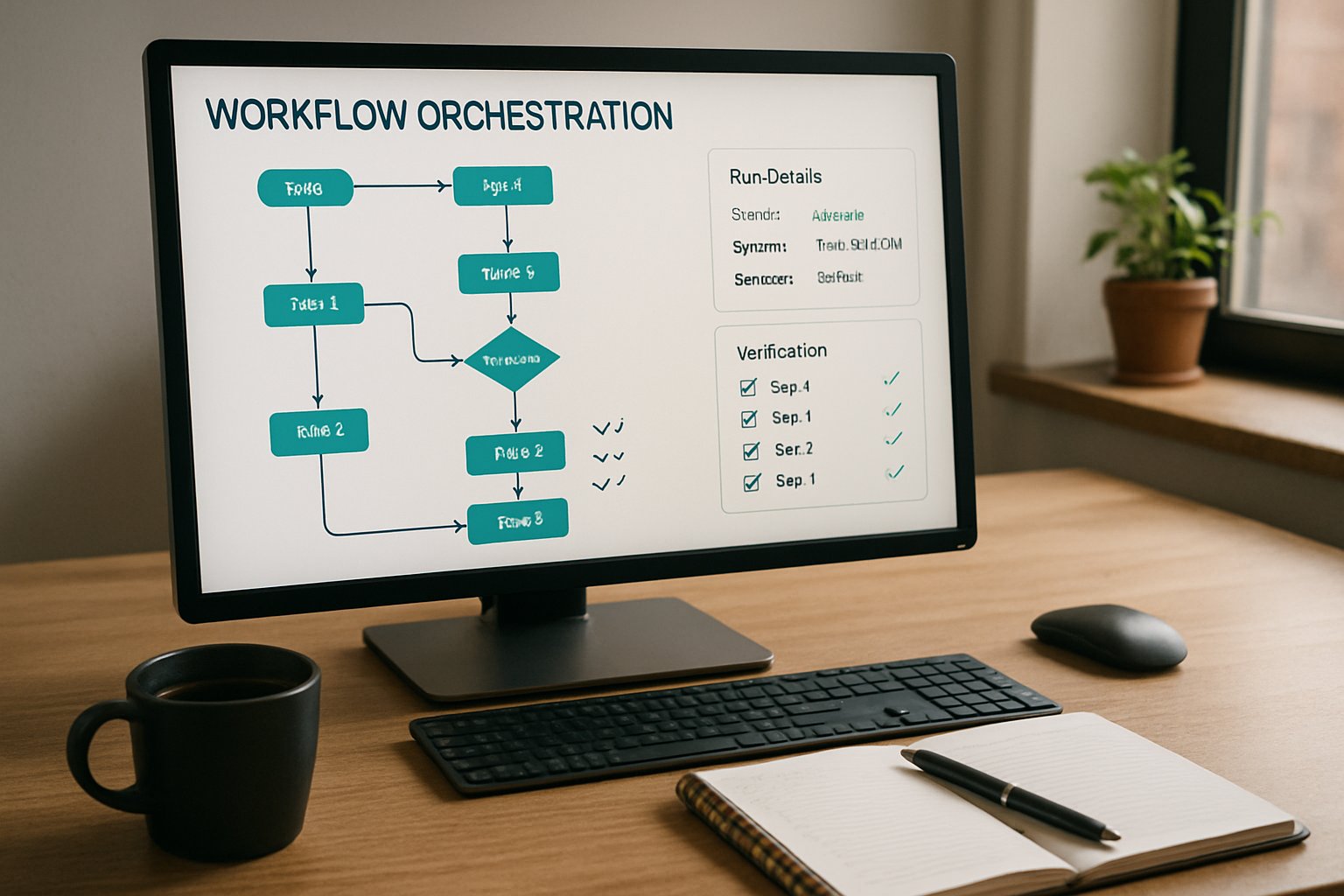
Zenflow positions itself as the missing Open-Source Layer between disparate agents and developer tools. According to Zencoder’s release, the desktop app coordinates planning, coding, testing, and verification agents inside repeatable workflows. Additionally, it integrates with VS Code, IntelliJ, GitHub, Jira, and mainstream CI/CD pipelines.
The company stresses model-agnostic design. Moreover, Zenflow can swap Anthropic, OpenAI, or Gemini models without workflow rewrites. Zencoder claims internal velocity doubled after adopting the stack. However, independent benchmarks remain pending.
- Free desktop download available immediately
- SOC 2 and GDPR readiness claimed
- Built-in verification guards against Coding Errors
- Agent roles: planner, implementer, tester, verifier
These features aim to move teams from “vibe coding” toward formal AI Orchestration. Therefore, early adopters can trial enterprise-grade flows without budget approval.
Zenflow’s launch details highlight breadth, yet usability will decide adoption. Consequently, hands-on testing becomes essential.
Engineering Workflow Shift Drivers
Spec-Driven Development replaces loose prompts with contractual requirements. Furthermore, Zenflow embeds those specs at each pipeline stage. Agents must satisfy acceptance tests before advancing, reducing silent Coding Errors.
Parallel execution also matters. Traditionally, single copilots serialize tasks, prolonging iterations. In contrast, multi-agent AI Orchestration lets a tester agent run while the implementer codes the next module. As a result, cycle time drops.
Finally, the Open-Source Layer encourages customization. Teams can share or fork agent templates, extending coverage to niche frameworks. Additionally, community scrutiny hardens security posture.
These workflow shifts bring discipline without throttling velocity. Nevertheless, cultural change remains a prerequisite.
Adoption drivers explain excitement. However, verification depth determines whether Zenflow eliminates debugging drudgery.
Verification And Developer Trust
Accuracy fears dominate survey headlines. Nevertheless, verification agents can compare outputs against specs and test suites. Moreover, Zenflow surfaces diff views inside IDEs, letting engineers approve or reject changes rapidly.
Andrew Filev, Zencoder CEO, argues, “Zenflow replaces prompt roulette with an assembly line.” Meanwhile, early testers praise automatic regression checks catching subtle Coding Errors. Therefore, confidence rises without manual deep dives.
Professionals can enhance their expertise with the AI Security Specialist™ certification. Consequently, teams reinforce secure coding alongside orchestrated automation.
Verification boosts trust, yet blind spots persist. Subsequently, continuous monitoring will remain crucial as models evolve.
Competitive Landscape Forces Today
Large clouds loom over startups. Microsoft, Google, and IBM already bundle orchestration hooks into enterprise suites. Additionally, GitHub Copilot may extend pipelines beyond suggestion engines. Zencoder must differentiate through speed, free pricing, and community.
Adjacent players such as Cursor, Replit, and Factory target similar pain points. However, none currently offer a comparable desktop-first Open-Source Layer with built-in verification. VentureBeat notes Zenflow’s model-agnostic flexibility as a primary moat.
Market share will hinge on developer love. Consequently, transparent roadmaps and responsive support could tilt decisions.
Competitive dynamics intensify innovation. Nevertheless, fragmentation may confuse buyers seeking unified stacks.
Risks And Critical Perspectives
Free tiers can mask future costs. Enterprises must inspect Zenflow’s EULA for usage caps. Moreover, security claims need third-party audits before regulated industries commit.
Data flow complexity also matters. Passing proprietary code through external models expands surface area. Therefore, teams should mandate encryption, logging, and role-based access. The Open-Source Layer eases inspection, yet configuration errors still create exposure.
Finally, productivity metrics remain vendor-reported. Independent studies comparing AI Orchestration pipelines to single-agent approaches are scarce. Consequently, ROI projections require careful pilot projects.
These risks underline due diligence. However, early movers can capture learning dividends while competitors wait.
Critical perspectives temper enthusiasm, guiding pragmatic adoption. Subsequently, leaders must balance speed with governance.
Strategic Takeaways For Leaders
Zenflow stakes an ambitious claim in the AI Orchestration arena. By blending a free desktop app, verification, and community-driven extensibility, Zencoder hopes to dent a fast-growing market.
Decision-makers should pilot workflows that mirror production reality. Moreover, measure defect rates, commit cadence, and developer satisfaction. Track whether multi-agent flows reduce recurring Coding Errors. Additionally, evaluate how the Open-Source Layer aligns with existing security controls.
Key evaluation checklist:
- Confirm licensing terms for commercial use
- Request SOC 2 and GDPR evidence
- Benchmark against incumbent pipelines
- Plan staff upskilling on orchestrated testing
These steps turn hype into actionable insight. Consequently, enterprises can adopt orchestrated engineering without compromising quality.
Strategic takeaways frame next actions. Meanwhile, continuous learning keeps teams ahead of ecosystem shifts.
Conclusion
Zenflow arrives as developer demand peaks for reliable AI Orchestration. The free desktop model, multi-agent verification, and model-agnostic design position Zencoder for rapid adoption. However, governance, security, and independent benchmarks remain essential checkpoints. Moreover, integrating certifications like the linked security credential sharpens organizational readiness. Ultimately, leaders who pilot, measure, and refine orchestration workflows will outpace slower rivals. Explore Zenflow, validate its fit, and elevate your team’s AI engineering discipline today.


