

AI CERTS
7 months ago
2025 Smart TV Launches Transform India’s Premium Viewing Market
Moreover, IDC reports 12.1 million units shipped in 2024, marking 8.6% growth despite macro headwinds. This article dissects the launches, market data, and underlying TV Tech innovations shaping the competitive field. Readers will also learn why platform updates, gaming features, and extended warranties now influence purchase decisions. Additionally, experts offer context on how offline showrooms and online flash sales intersect within India’s Consumer Electronics ecosystem.
Throughout, Display terminology such as QLED and Mini-LED will be explained in clear, jargon-free terms. Nevertheless, hype around AI will be balanced with independent assessments and buyer checklists. Finally, professionals can upskill using a linked certification, staying ready for the next wave of screen disruption.
Premium Screens Drive Demand
Large panels have become the prime status symbol in Indian homes. Furthermore, Samsung, Sony, LG, and TCL all pushed 65-inch and 98-inch flagships during 2025. The premium push matters because average selling prices rise while unit growth plateaus. In contrast, value players like Xiaomi and Hisense use attractive launch pricing to lure first-time Smart TV buyers.
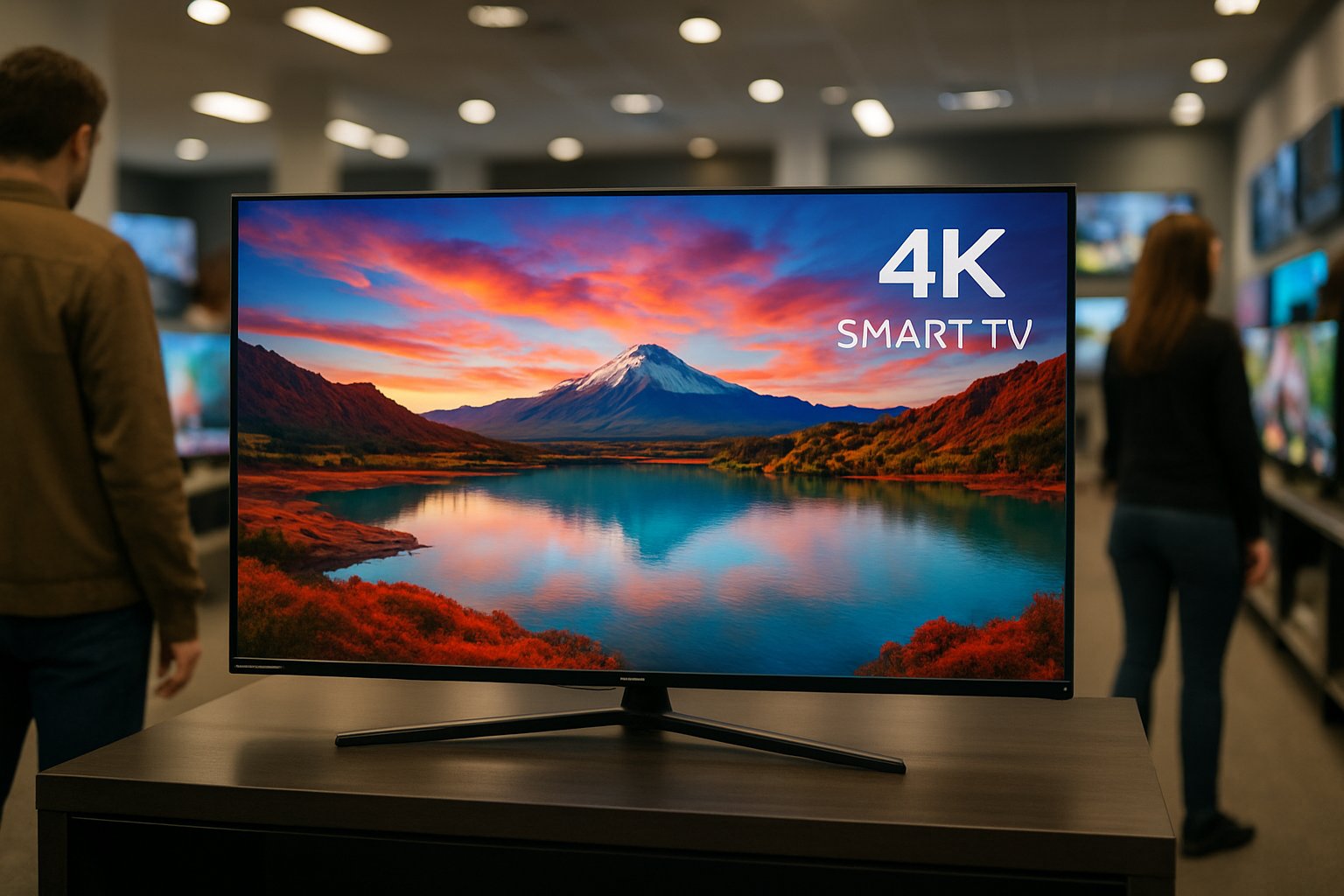
- 55"+ shipments jumped 43% year-on-year, according to IDC.
- Samsung led 2024 share at 16.1%, maintaining its Display leadership.
- TCL’s QD Mini-LED C72K started at ₹84,990, narrowing the affordability gap.
Moreover, showroom managers note that families now evaluate HDR peak brightness and zone dimming before screen size. Consequently, Display quality drives conversion, not merely diagonal inches. These trends confirm that premium segments will guide India’s next Consumer Electronics growth phase.
The segment’s momentum sets expectations for smarter image engines. However, features alone cannot guarantee loyalty, leading to the next discussion on AI differentiation.
AI Features Define Differentiation
Marketing materials overflow with promises of “neural processors” that upscale everything to 4K. Samsung’s Vision AI, Sony’s XR Cognitive, and Hisense’s AI Smooth Motion anchor their respective campaigns. Additionally, Xiaomi touts adaptive brightness and voice scene selection. Despite varied branding, the goal remains similar: reduce visible artifacts and amplify perceived contrast.
AI Claims Versus Reality
Independent reviewers caution that many AI settings boost noise on low-bit streams. Nevertheless, controlled studio tests show genuine sharpness gains on high-quality sources. Therefore, users should experiment with default presets rather than enabling every enhancement. One Smart TV model can look radically different after minor tweaks, especially on live sports.
AI processors now influence buying checklists. Consequently, vendors have begun offering seven-year or eight-year update pledges. Yet, update scope varies, ranging from security patches to full feature drops. The nuances push consumers toward research before swiping their cards.
These observations underline that AI alone cannot close sales. Subsequently, distribution dynamics and channel preferences become equally decisive.
Channel Shifts Shape Sales
During 2024, offline retail clawed back share from e-commerce for the first time in three years. Moreover, IDC attributes the swing to shoppers wanting in-store demos for premium panels. Retailers responded with immersive sound zones and real-time contrast comparisons.
Offline Retail Resurgence Trends
Store managers report that customers often arrive after reading online reviews, then negotiate bundled soundbars. Meanwhile, Amazon and Flipkart counter with flash deals and same-day installation promises. Therefore, omnichannel strategies now sit at the core of every Smart TV launch calendar.
Two concluding insights stand out. First, experiential showrooms accelerate premium conversion. Second, aggressive online finance schemes preserve volume. Consequently, brands turn toward niche communities—most notably gamers—to sustain buzz.
Gaming Focus Gains Ground
Console ownership may remain niche, yet gaming features dominate 2025 product sheets. Hisense E7Q Pro ships with 144 Hz panels and AMD FreeSync Premium. Similarly, Sony positions its Bravia 5 Mini-LED line as the perfect PlayStation companion. Additionally, TCL integrates 240 Hz effective motion smoothing for esports streams.
In contrast, budget lines restrict refresh rates to 60 Hz, nudging enthusiasts up the price ladder. Moreover, low-latency game modes now appear even on mid-range Smart TV catalogues. Consequently, the gamer narrative provides a clear upsell path without heavy subsidy.
These developments highlight feature convergence across tiers. However, software ecosystems still determine long-term satisfaction, creating another layer of complexity.
Platform Choices Confuse Buyers
Samsung backs Tizen; LG insists on webOS; Sony, TCL, and Xiaomi opt for Google TV; Hisense promotes VIDAA. Furthermore, Amazon pushes Fire TV integrations through select OEM partnerships. The fragmented scene troubles app developers and frustrates early adopters.
Moreover, some Smart TV models promise eight-year security updates, yet third-party streaming apps stop supporting older OS versions sooner. Therefore, prospective buyers should match viewing habits with platform roadmaps. Professionals can enhance their expertise with the AI+ Human Resources™ certification, gaining skills to navigate cross-platform product management inside Consumer Electronics firms.
Two points summarise the stakes. Longevity now rivals picture quality in purchase criteria. Nevertheless, clear communication of update policies remains rare. The stage is set for next-year forecasts.
Prospects For 2026 Growth
IDC predicts mid-single-digit shipment growth as inventories normalise. Additionally, miniaturised backlight costs will continue falling, allowing QD Mini-LED to enter sub-₹60,000 price bands. Meanwhile, sustained GDP expansion supports discretionary spending on Display upgrades.
India’s Consumer Electronics lobby expects duty rationalisation that could shave import costs. Consequently, domestic assembly lines may fast-track larger panels, reducing stock-out risks. Market watchers also anticipate Micro-LED prototypes, yet widespread adoption remains several cycles away.
In closing, the coming year will test whether marketing promises align with measurable performance. Therefore, readers should watch independent labs, warranty fine print, and evolving TV Tech standards.
2025 cemented India’s ascent as a premium viewing battleground. Moreover, six major brands refreshed catalogs, and gaming features became mainstream. Nevertheless, platform fragmentation and update opacity demand informed decision-making. By tracking data, inspecting showrooms, and verifying AI claims, buyers can extract maximum value from any Smart TV purchase. For continued professional growth, explore certifications and stay plugged into next-gen screen innovation.
Disclaimer: Some content may be AI-generated or assisted and is provided ‘as is’ for informational purposes only, without warranties of accuracy or completeness, and does not imply endorsement or affiliation.


